How Professional Driving Instructors Help Teens Build Lifelong Safe Driving Habits
Learning to drive is one of the biggest milestones in a teenager’s life. For parents, it can also be one of the most stressful. Knowing the rules of the road is important, but becoming a truly safe driver requires much more than memorizing traffic signs or passing a road test.
Teen drivers need practice developing good judgment, recognizing hazards, managing distractions, maintaining safe following distances, and making calm decisions when road conditions change.
That’s where professional driving instructors can make a meaningful difference.
Professional in-car driving lessons give teens the opportunity to learn safe driving techniques from trained instructors who understand how to identify weaknesses, correct mistakes, and reinforce positive habits. The skills teens develop during these early driving experiences can influence how they drive for years to come.
Here’s how professional driving instructors help teens build lifelong safe driving habits.
Professional Driving Instructors Establish Good Habits Early
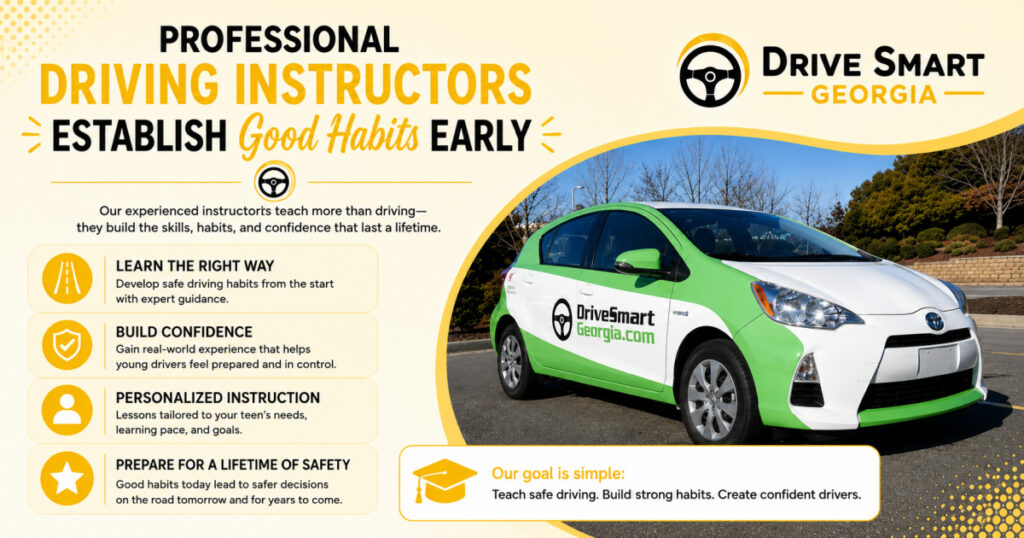
New drivers are forming habits every time they get behind the wheel.
Some habits are positive, such as consistently checking mirrors before changing lanes or maintaining a safe following distance. Others can become dangerous if they go uncorrected.
A professional driving instructor can identify problems before they become automatic.
For example, a teen might:
- Forget to check a blind spot before changing lanes
- Follow other vehicles too closely
- Brake too late when approaching an intersection
- Drive too quickly around curves
- Focus only on the vehicle directly ahead
- Forget to scan for pedestrians and cyclists
Parents may notice some of these behaviors, but professional instructors are specifically trained to evaluate driving skills and provide immediate, constructive feedback.
Correcting unsafe habits early can make it easier for teens to develop safer driving routines from the beginning.
Teens Learn to Scan the Road Instead of Simply Reacting
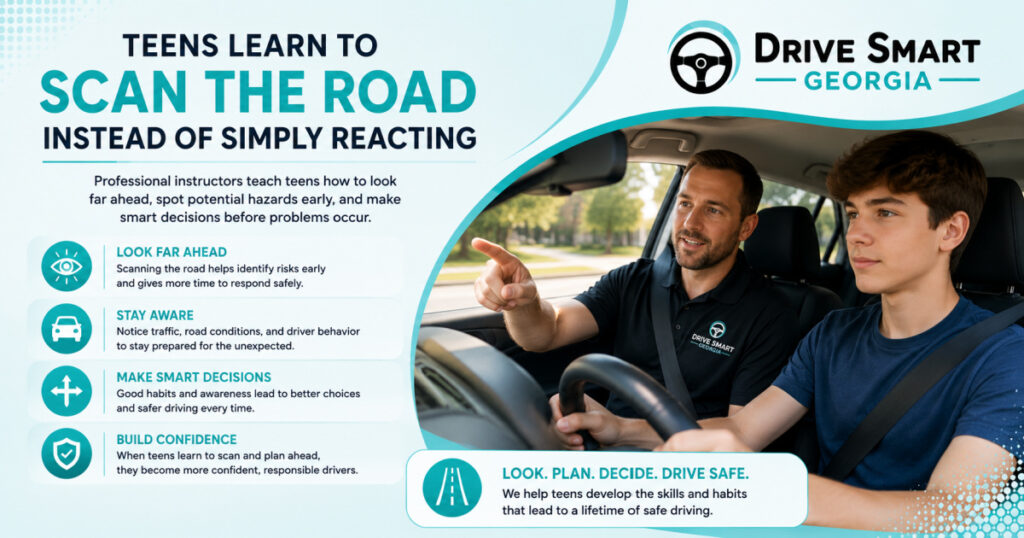
One of the most important skills a new driver can develop is learning to anticipate what might happen next.
Beginning drivers often focus primarily on the vehicle immediately in front of them. More experienced drivers continuously scan farther ahead, monitor mirrors, watch side streets, and look for developing hazards.
Professional driving instructors teach teens to look beyond the immediate situation.
That may include watching for:
- Vehicles preparing to enter the roadway
- Traffic lights that may soon change
- Pedestrians approaching crosswalks
- Cyclists near the edge of the road
- Brake lights several vehicles ahead
- Construction zones
- Unexpected lane changes
- Animals near the roadway
Developing this type of visual awareness can give drivers more time to respond safely instead of reacting at the last second.
Professional Driving Lessons Strengthen Defensive Driving Skills
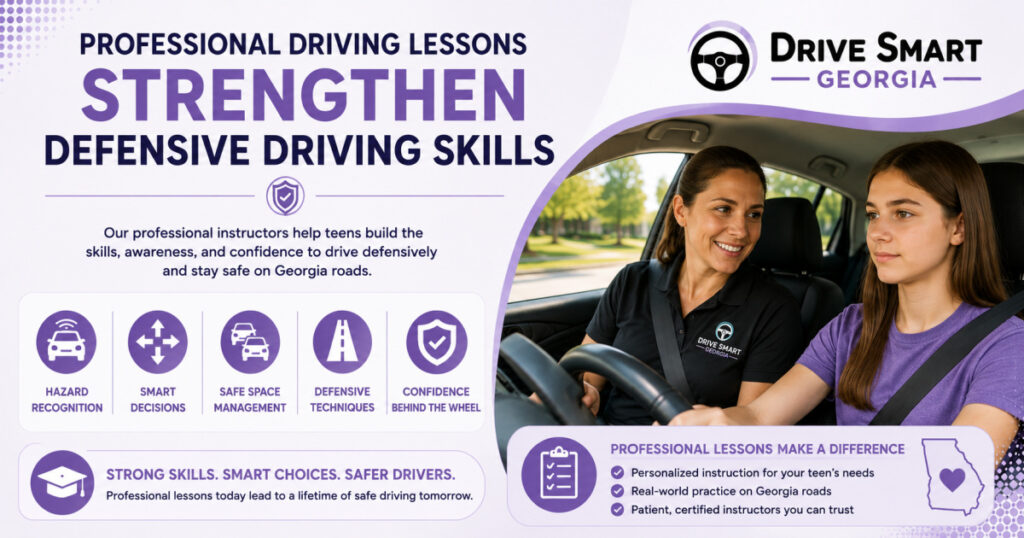
Safe driving isn’t only about controlling your own vehicle. Drivers must also be prepared for mistakes made by other people on the road.
That is the foundation of defensive driving.
Professional driving instructors can teach teens how to recognize potential risks and create additional time and space around their vehicles.
Defensive driving habits may include maintaining an appropriate following distance, avoiding another driver’s blind spot, anticipating sudden stops, adjusting speed for weather and traffic, and leaving an escape route whenever possible.
These skills help teens understand an important lesson: even when they are following the rules, they still need to remain prepared for unexpected situations.
Instructors Teach Teens How to Manage Space
New drivers sometimes underestimate how much space they need to stop, turn, merge, or respond to traffic.
Professional instruction helps teens develop better space management.
They learn how to maintain appropriate distances between their vehicle and other road users while avoiding situations that leave them with few options.
For example, instructors can help teens practice:
- Maintaining a safe following distance
- Creating space before changing lanes
- Leaving adequate room at intersections
- Adjusting distance in rain or heavy traffic
- Avoiding driving directly beside another vehicle for extended periods
- Positioning the vehicle safely within a lane
Good space management gives drivers more time to identify hazards and make safer decisions.
Professional Instructors Help Build Better Speed Control
Speed management involves much more than staying below the posted speed limit.
Safe drivers adjust their speed based on road conditions, traffic, visibility, weather, pedestrians, curves, intersections, and surrounding vehicles.
Professional driving instructors help teens understand when slowing down is appropriate even when the posted speed limit would technically allow them to drive faster.
That may include driving through neighborhoods, approaching busy intersections, traveling through construction zones, driving at night, or navigating wet roads.
Learning how to choose an appropriate speed for current conditions is an important part of becoming an independent driver.
Teens Receive Objective Feedback
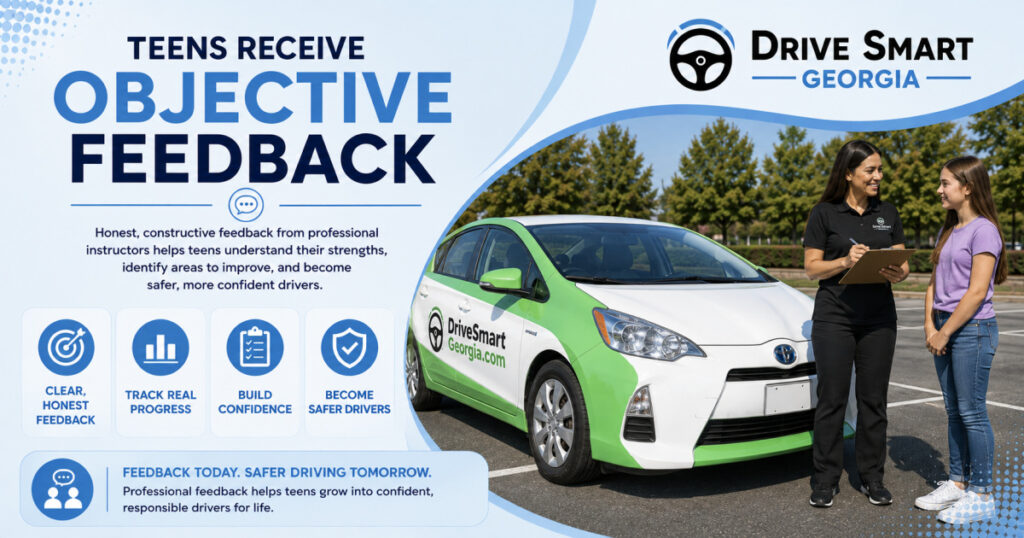
Teaching your own teenager to drive isn’t always easy.
Parents know their teens well, but emotions can sometimes make driving practice stressful for both sides. A parent may become nervous, while the teen may interpret coaching as criticism.
A professional instructor provides an additional perspective.
Instead of relying solely on a parent’s impressions, teens receive feedback from someone whose job is to evaluate driving performance.
An instructor can explain:
- What the teen is doing well
- Which skills need additional practice
- Why a particular behavior could become unsafe
- How to correct the behavior
- What parents should continue practicing at home
That feedback can help families make supervised driving practice more productive.
Professional Driving Lessons Expose Teens to Different Situations
Driving around the same neighborhood repeatedly can help a beginner become comfortable behind the wheel, but teens eventually need experience in a wider variety of environments.
Professional driving lessons can introduce new situations gradually as a student’s skills improve.
Depending on the driver’s experience level, practice may include:
- Neighborhood streets
- Multi-lane roads
- Busy intersections
- Lane changes
- Turning lanes
- Parking
- Higher-speed roads
- Heavy traffic
- Different weather or lighting conditions
Exposure to different environments helps teens learn that safe driving techniques must adapt to changing conditions.
Instructors Reinforce the Importance of Eliminating Distractions
Distracted driving is especially concerning for inexperienced drivers because they are still developing basic vehicle-control and decision-making skills.
Professional instructors can reinforce the importance of eliminating distractions before the vehicle starts moving.
Teens should develop habits such as putting away their phone, setting navigation before leaving, adjusting mirrors and climate controls beforehand, and keeping their attention focused on driving.
These routines may seem small, but repetition can make them automatic.
The goal is for distraction prevention to become part of the teen’s normal driving routine rather than something they must remember each time.
Professional Driving Instruction Can Build Confidence
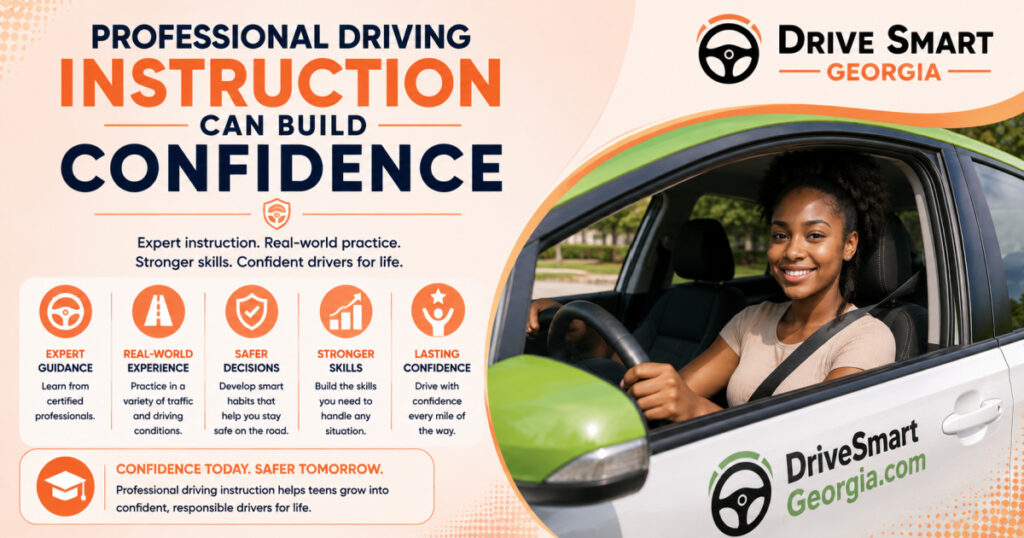
Confidence behind the wheel is important, but it needs to be based on skill rather than simply feeling comfortable.
Some new drivers are extremely nervous. Others become confident before they have developed the judgment necessary to handle more difficult situations.
Professional instructors can help teens build confidence gradually.
As students successfully practice turns, lane changes, intersections, parking, hazard recognition, and other skills, they gain experience they can rely on.
The result is safe driving confidence built through instruction and practice.
Parents Still Play an Essential Role
Professional driving lessons are most effective when combined with regular supervised practice.
Parents have many more opportunities to reinforce what teens learn during lessons.
After professional instruction, parents can continue practicing skills such as scanning intersections, maintaining following distance, checking blind spots, managing speed, and making safe lane changes.
Consistency is important.
When instructors and parents reinforce the same expectations, teens receive a clearer message about what safe driving should look like.
Safe Driving Habits Matter Long After the Road Test
Passing a road test is an important milestone, but it shouldn’t be viewed as the end of learning.
New drivers continue developing judgment and experience after earning their licenses.
The habits they establish during driver training can continue influencing how they drive as adults.
Consistently checking blind spots, scanning ahead, avoiding distractions, maintaining safe following distances, and adjusting speed for conditions are not simply skills needed to pass a test.
They are lifelong safe driving habits.
Build Safer Driving Skills with Drive Smart Georgia
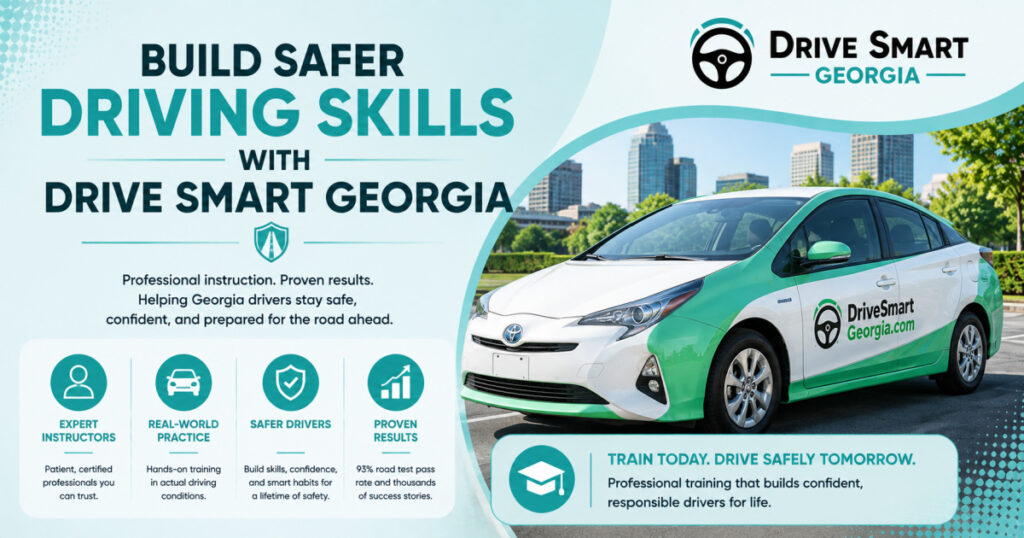
At Drive Smart Georgia, our professional driving instructors help teens develop the practical skills, judgment, and confidence they need to become safer drivers.
During behind-the-wheel instruction, students can work on essential skills including vehicle control, lane positioning, speed management, hazard recognition, space management, intersections, lane changes, parking, and defensive driving.
Professional instruction can also help parents understand which skills their teens should continue practicing before driving independently.
Learning to drive safely takes time. Starting with strong habits, professional guidance, and plenty of supervised practice can help teens build a foundation for safer driving that lasts well beyond the road test.
Drive Smart Georgia locations:
- Milton: 850 Mayfield Rd., Suite L-9, Milton, GA 30009. (770) 628-7540
- Johns Creek: 11380 Southbridge Pkwy., Alpharetta, GA 30022. (770) 232-0903
- Alpharetta: 5354 McGinnis Ferry Rd., Suite 226B, Alpharetta, GA 30005. (770) 232-0900
- Cumming: 1790 Peachtree Pkwy., Suite 202, Cumming, Ga. (770) 239-4294
- Suwanee: 970 Peachtree Industrial Blvd., Suwanee, GA 30024. (770) 741-0455
- Roswell: 590 W. Crossville Rd., Suite 204, Roswell, GA 30075. (770) 741-0405
Related articles:
- Night Driving Tips for Georgia Teen Drivers
- 10 Signs Your Teen is Ready to Take the Georgia Road Test
- The Ultimate Georgia Teen Driving Safety Checklist
- Defensive driving is now available at Drive Smart Georgia