How to Overcome Driving Anxiety
Feeling nervous behind the wheel is more common than many people realize. Whether you’re a new teen driver, an adult learning later in life, or someone returning to driving after a crash or long break, driving anxiety can make every trip feel stressful.
The good news? Driving confidence can be learned.
With patience, practice, and the right support, most people gradually replace fear with confidence. Here’s what causes driving anxiety – and proven strategies that can help you become a calmer, safer driver.
What Is Driving Anxiety?
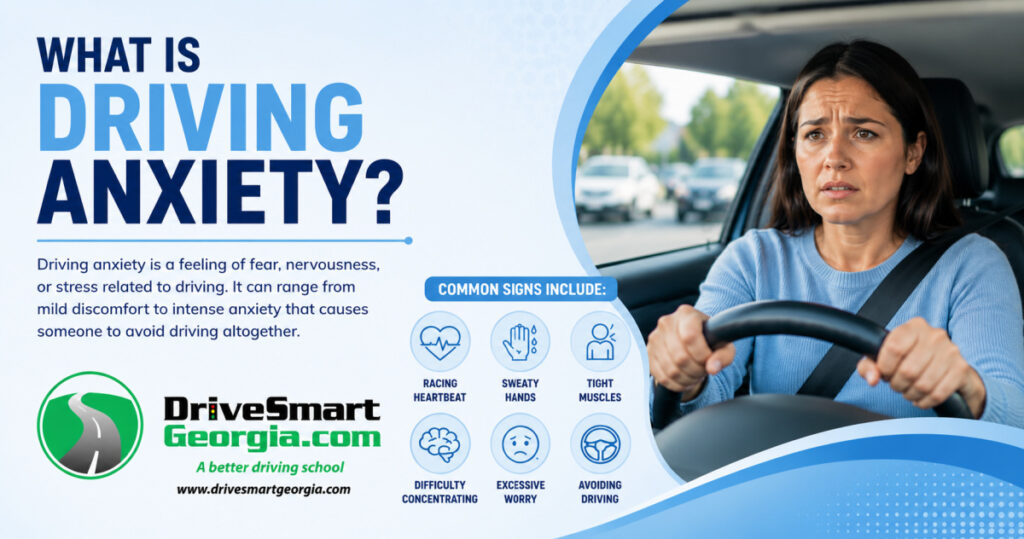
Driving anxiety is a feeling of fear, nervousness, or stress related to driving. It can range from mild discomfort to intense anxiety that causes someone to avoid driving altogether.
Common signs include:
- Racing heartbeat
- Sweaty hands
- Tight muscles
- Difficulty concentrating
- Fear of making mistakes
- Avoiding highways or busy intersections
- Worrying excessively before driving
Many new drivers experience these feelings during the first few months of driving. Even experienced drivers may develop anxiety after an accident, receiving a traffic ticket, or spending years away from driving.
The important thing to remember is that driving anxiety is common – and treatable.
What Causes Driving Anxiety?
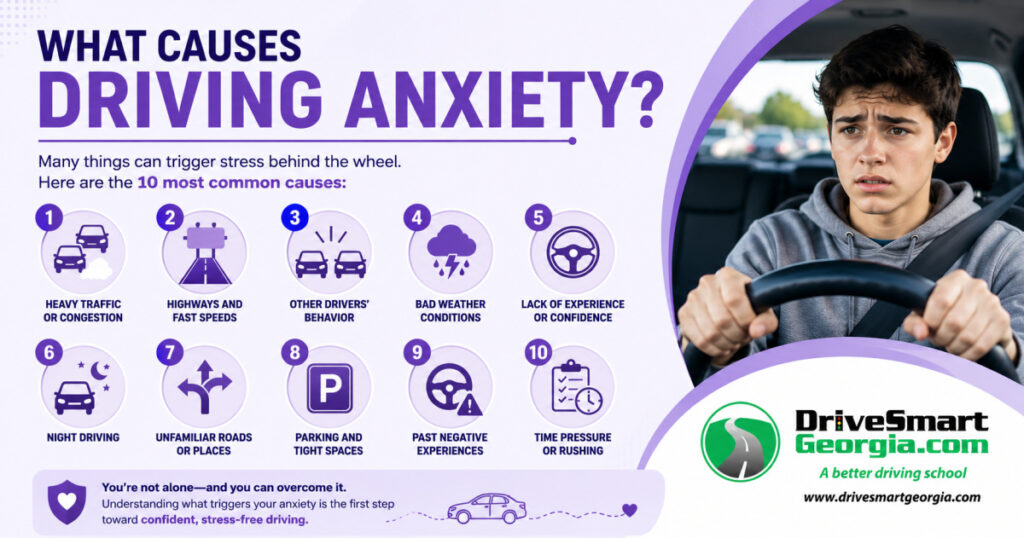
The below factors can contribute to nervous driving.
Lack of Experience
For teen drivers especially, everything is new.
New drivers must learn how to:
- Judge traffic
- Change lanes
- Merge onto highways
- Park
- Make left turns
All driving skills need practice – and lots of patience. Until these skills become automatic, it’s natural to feel overwhelmed.
Fear of Making a Mistake
Many drivers worry they’ll:
- Cause an accident
- Damage the vehicle
- Fail the road test
- Embarrass themselves
- Make other drivers angry
This pressure often makes driving feel harder than it actually is.
Previous Negative Experiences
Driving anxiety sometimes develops after:
- A collision
- A near miss
- Witnessing an accident
- Receiving a ticket
- Failing a road test
These experiences can reduce confidence – even if you’re a capable driver.
Pressure From Passengers
Some new drivers become more anxious when:
- Parents constantly correct them
- Friends talk loudly
- Passengers criticize every decision
A calm learning environment makes a tremendous difference.
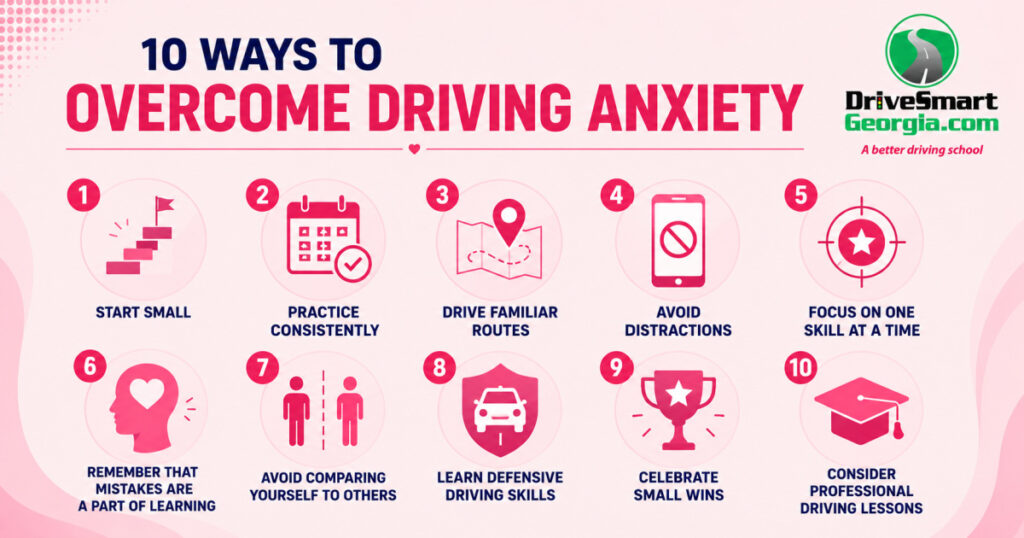
10 Ways to Overcome Driving Anxiety
-
Start Small
Don’t begin with Atlanta rush-hour traffic.
Instead, practice in:
- Empty parking lots
- Quiet neighborhoods
- Residential streets
- Low-traffic roads
Gradually increase the difficulty as your confidence grows. Small successes build lasting confidence.
-
Practice Consistently
Confidence comes from repetition. Instead of driving once every few weeks, aim to practice several times each week.
Even short 20 to 30-minute practice sessions help develop muscle memory and reduce anxiety faster than occasional long drives.
-
Drive Familiar Routes
Choose roads you already know. Knowing where you’ll turn and what to expect allows you to focus on driving rather than navigation. Once those routes feel comfortable, slowly introduce new roads.
-
Limit Distractions
Anxious drivers need maximum focus.
Before driving:
- Put your phone away.
- Set your GPS before leaving.
- Adjust mirrors and seat.
- Choose calm music – or drive without music.
Reducing distractions helps you feel more in control.
-
Focus on One Skill at a Time
Trying to master everything in one drive can be overwhelming.
Instead, dedicate each practice session to one or two skills, such as:
- Lane changes
- Parking
- Left turns
- Highway merging
- Roundabouts
- Parallel parking
- Nighttime driving
- Driving on wet roads
Breaking driving into manageable skills makes learning much less intimidating.
-
Remember That Mistakes Are Part of Learning
Every experienced driver has:
- Missed a turn
- Parked crooked
- Stalled a vehicle
- Forgotten a signal
- Taken the wrong exit
Making a small mistake doesn’t mean you’re a bad driver. It simply means you’re learning.
-
Avoid Comparing Yourself to Others
Some people become comfortable driving after only a few lessons. Others need more practice. Both are completely normal. Focus on your own progress instead of comparing yourself with friends or siblings.
-
Learn Defensive Driving Skills
Confidence increases when you know how to recognize and respond to potential hazards.
Defensive driving teaches drivers to:
- Anticipate other drivers’ actions
- Maintain safe following distances
- Identify hazards early
- Make safer decisions
- Stay calm in challenging situations
Feeling prepared often reduces anxiety significantly.
-
Celebrate Small Wins
Confidence grows through small victories.
Celebrate milestones like:
- Your first solo drive
- Successfully merging onto a highway
- Parallel parking correctly
- Driving in light rain
- Completing a longer trip
Recognizing progress keeps you motivated.
-
Consider Professional Driving Lessons
One of the fastest ways to overcome driving anxiety is by working with a professional driving instructor.
Professional instructors:
- Teach in a calm, supportive environment
- Build skills step by step
- Provide objective feedback
- Help correct bad habits early
- Introduce increasingly challenging situations safely
Many training vehicles also include dual-control brakes and accelerators, giving new drivers additional peace of mind during lessons.
Tips for Parents Helping Anxious Teen Drivers
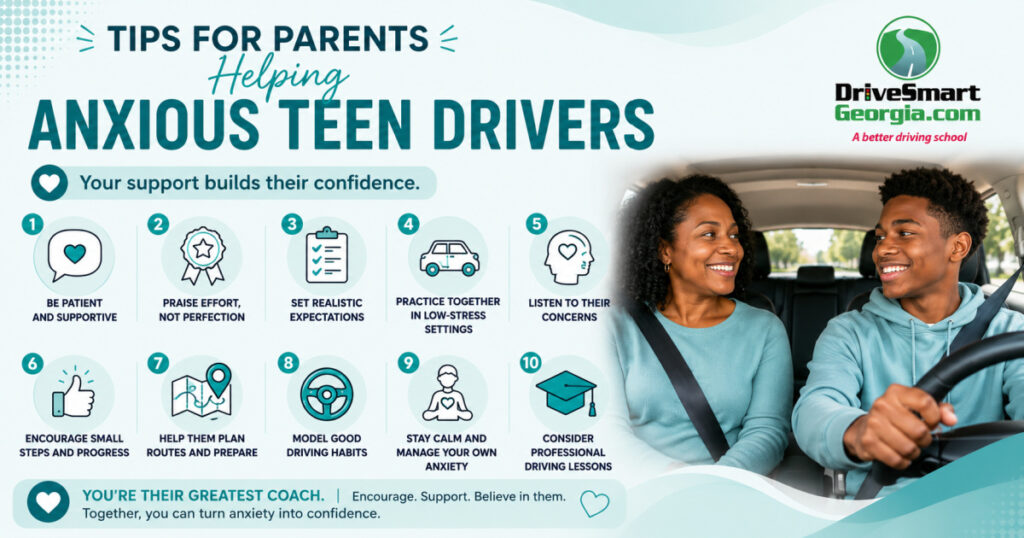
Parents play an important role in building confidence.
Here are a few ways to help:
- Be patient and supportive
- Praise effort, not perfection
- Set realistic expectations
- Practice together in low-stress settings
- Offer lots of encouragement
- Help them plan routes and prepare
- Model good driving habits
- Stay calm and manage your own anxiety
- Consider professional driving lessons
Remember, confidence develops over time – not overnight.
When Should You Seek Extra Help?
If driving anxiety causes you to:
- Avoid driving completely
- Experience panic attacks while driving
- Feel anxious weeks before a road test
- Avoid highways or certain roads indefinitely
Additional support may help.
Professional driving instruction often provides the structured practice and encouragement needed to overcome these challenges. If anxiety is severe or extends beyond driving into other areas of daily life, consider speaking with a licensed mental health professional, who can offer evidence-based therapy.
Building Confidence Takes Time
There is no single moment when someone suddenly becomes a confident driver.
Confidence develops through:
- Consistent practice
- Learning from mistakes
- Safe instruction
- Gradually increasing challenges
- Gaining real-world experience
Every mile you drive helps strengthen your skills and reduces uncertainty.
With patience and persistence, driving can become a normal – and even enjoyable – part of everyday life.
Ready to Build Your Driving Confidence?

Whether you’re a teen driver working toward your first license or an adult returning to driving after years away, professional instruction can help you feel safer behind the wheel.
At Drive Smart Georgia, our experienced instructors create a supportive, low-stress learning environment designed to help students build confidence at their own pace. With patient coaching, late-model vehicles equipped with dual controls, and personalized instruction, you’ll develop the skills needed to become a safe, confident driver for life.
Take the first step today and discover how the right training can turn driving anxiety into driving confidence.
Book in-car driving lessons today.
Frequently Asked Questions
Can driving anxiety go away?
Yes. Most drivers become more comfortable as they gain experience, practice regularly, and build confidence through positive driving experiences.
Is it normal to be scared when learning to drive?
Absolutely. Feeling nervous is very common, especially for teen drivers and adults learning to drive for the first time.
Do professional driving lessons help with anxiety?
Yes. Professional instructors teach at your pace, provide constructive feedback, and help you develop confidence in a safe, controlled environment.
How long does it take to become a confident driver?
Everyone progresses differently. Some drivers gain confidence within a few weeks, while others may take several months of regular practice. Consistency is more important than speed.
Drive Smart Georgia locations:
- Milton: 850 Mayfield Rd., Suite L-9, Milton, GA 30009. (770) 628-7540
- Johns Creek: 11380 Southbridge Pkwy., Alpharetta, GA 30022. (770) 232-0903
- Alpharetta: 5354 McGinnis Ferry Rd., Suite 226B, Alpharetta, GA 30005. (770) 232-0900
- Cumming: 1790 Peachtree Pkwy., Suite 202, Cumming, Ga. (770) 239-4294
- Suwanee: 970 Peachtree Industrial Blvd., Suwanee, GA 30024. (770) 741-0455
- Roswell: 590 W. Crossville Rd., Suite 204, Roswell, GA 30075. (770) 741-0405
Related articles:
- What to Expect During In-car Driving Lessons at Drive Smart Georgia
- How Parents Can Help Teens Become Safer Drivers
- Driver’s Ed Timeline: Class First, Permit Later
- Who Should Take a Defensive Driving Course in Georgia