How Parents Can Help Teens Become Safer Drivers
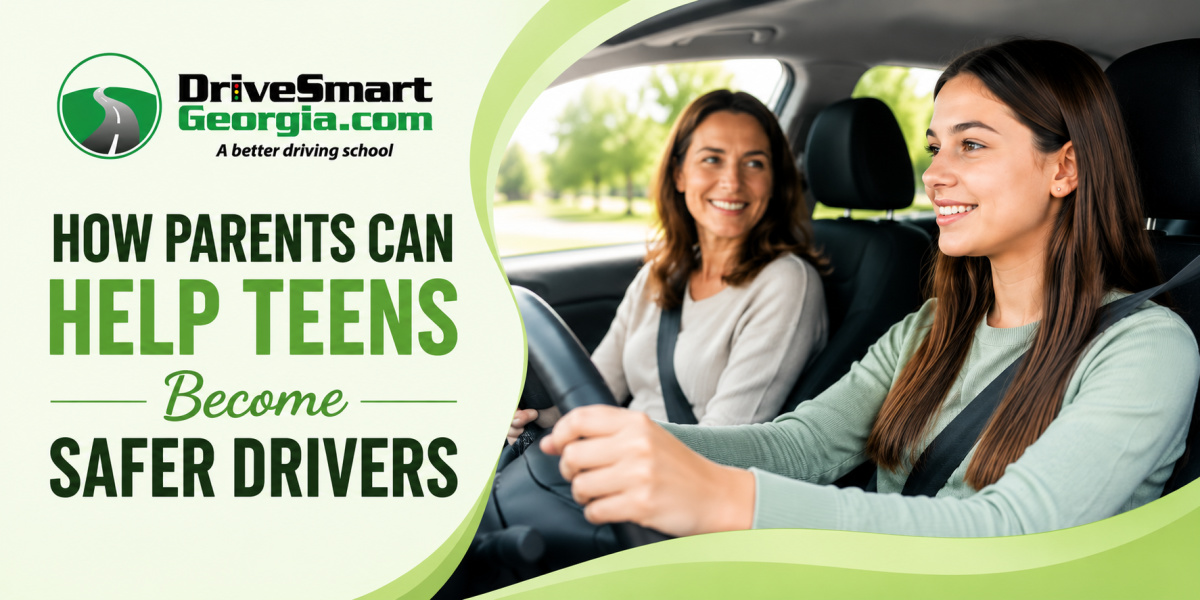
Watching your teenager get behind the wheel for the first time is exciting, but it can also be stressful. Many parents worry about distracted driving, poor decision-making, heavy traffic, and whether their teen is truly prepared for the responsibility of driving independently.
The good news is that parents play one of the most important roles in helping teens develop safe driving habits. While Driver’s Ed classes and professional driving lessons provide essential instruction, what happens at home often has the biggest long-term impact on a young driver’s behavior.
If you’re wondering how you can help your teen become a safer driver, these practical strategies can make a significant difference.
Lead by Example

Teenagers learn more from what they observe than what they are told. If parents regularly speed, drive distracted, roll through stop signs, or ignore traffic laws, teens are likely to view those behaviors as acceptable.
Make a conscious effort to model safe driving habits every time you’re behind the wheel.
This includes:
- Wearing your seat belt
- Following speed limits
- Avoiding cell phone use while driving
- Using turn signals consistently
- Maintaining a safe following distance
- Staying calm during stressful traffic situations
Your daily driving behavior teaches lessons that no classroom can fully replicate.
Practice Frequently in Different Conditions
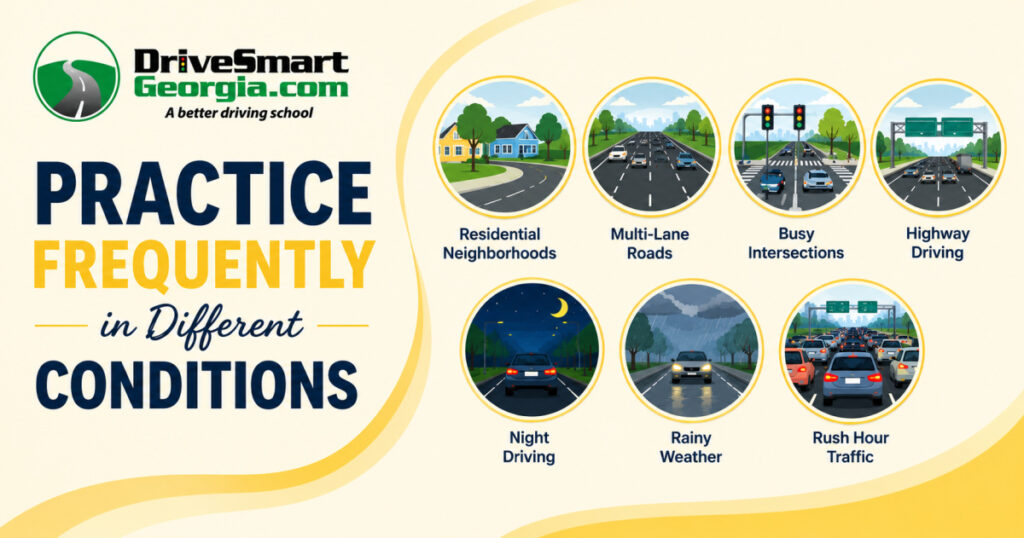
Earning a learner’s permit is just the beginning. Safe driving skills develop through experience, and teens need exposure to a variety of driving situations before they are ready to drive independently.
Many parents focus only on basic neighborhood driving.
Teens should gradually gain experience in:
- Residential neighborhoods
- Multi-lane roads
- Busy intersections
- Highway driving
- Night driving
- Rainy weather conditions
- Rush-hour traffic
The more situations your teen encounters while you are in the passenger seat, the better prepared they will be when driving alone.
Encourage Defensive Driving Skills
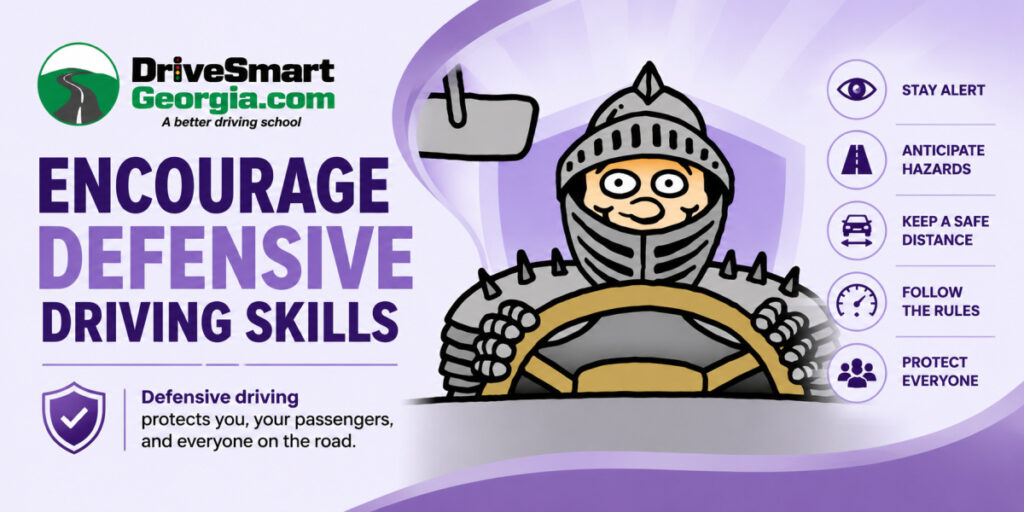
One of the biggest challenges for new drivers is learning to anticipate hazards before they become problems.
Defensive driving involves staying aware of potential risks and making decisions that reduce the chance of a crash.
Teach your teen to:
- Scan far ahead for potential hazards
- Leave plenty of space between vehicles
- Watch for pedestrians and cyclists
- Anticipate the actions of other drivers
- Avoid aggressive driving behaviors
- Identify escape routes in traffic
- Developing defensive driving habits early can help teens avoid many common accidents.
Set Clear Family Driving Rules
Every family should establish expectations before a teen begins driving independently. Creating clear rules removes uncertainty and helps teens understand their responsibilities.
Consider discussing:
- Cell phone restrictions
- Passenger limits
- Curfews
- Seat belt requirements
- Speeding consequences
- Expectations during bad weather
- Vehicle care responsibilities
- Consider signing a Parent/Teen Driver Agreement, like this downloadable one from the CDC
When expectations are clearly defined, teens are more likely to make responsible decisions.
Limit Distractions
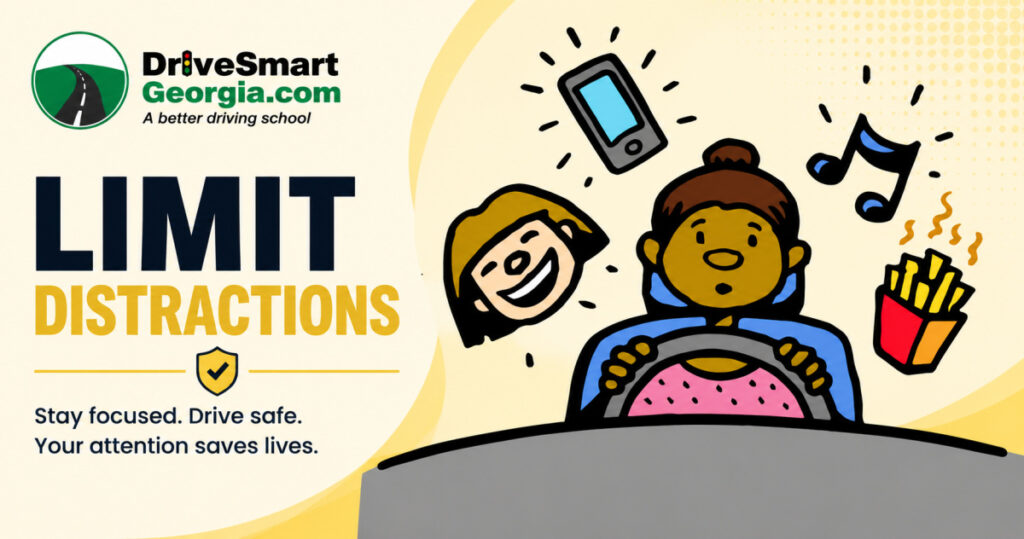
Distracted driving remains one of the biggest risks for teen drivers. Cell phones, passengers, music, navigation systems, and even eating behind the wheel can reduce a driver’s focus.
Parents can help by encouraging teens to:
- Put phones on “Do Not Disturb While Driving”
- Set navigation before leaving
- Limit passenger distractions
- Keep music at a reasonable volume
- Focus solely on driving
Many parents choose to implement a “phone in the glove box” rule during the first months of independent driving.
Continue Coaching After Licensing
Receiving a driver’s license does not mean learning is complete.
In fact, the first six to twelve months of independent driving are often when teens face the greatest risks because they have more freedom but limited experience.
Continue riding with your teen periodically after they become licensed. Use these opportunities to reinforce good habits and address any concerns you observe.
Constructive feedback is often more effective than criticism. Focus on helping your teen improve rather than pointing out every mistake.
Invest in Professional Driving Lessons
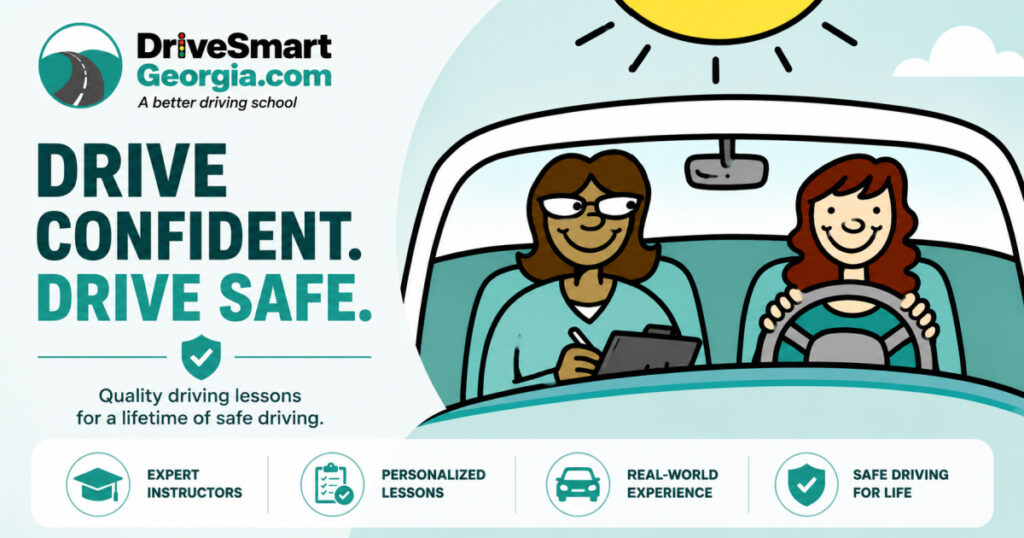
Parents provide valuable practice, but professional driving instructors offer expertise that most parents cannot replicate.
Professional driving lessons expose students to structured instruction, defensive driving techniques, and real-world driving situations under the guidance of trained instructors.
Benefits of professional driving lessons include:
- Objective feedback
- Defensive driving instruction
- Experience in different traffic environments
- Increased driver confidence
- Improved vehicle control skills
- Preparation for the Georgia road test
Many parents find that combining professional instruction with supervised practice creates the strongest foundation for safe driving.
Talk Openly About Driving Risks
Teen drivers face unique challenges that adults sometimes overlook.
Discuss topics such as:
- Distracted driving
- Speeding
- Peer pressure
- Fatigue
- Weather conditions
- Impaired driving
Open conversations help teens understand that safe driving involves making smart decisions every time they get behind the wheel.
Avoid fear-based lectures. Instead, focus on realistic scenarios and practical strategies for handling difficult situations.
Praise Good Decisions
Parents often notice mistakes quickly but overlook positive behaviors. Recognizing good driving decisions can reinforce safe habits and build confidence.
Praise your teen when they:
- Maintain proper following distance
- Handle a difficult situation calmly
- Follow traffic laws consistently
- Avoid distractions
- Demonstrate defensive driving skills
Positive reinforcement encourages teens to continue making safe choices.
Partner With Drive Smart Georgia
Teaching teens to drive can be challenging for parents. Professional guidance can help reduce stress while giving students the skills they need to stay safe on the road.
At Drive Smart Georgia, we’ve helped more than 100,000 students develop safe driving habits over the past 17 years. Our DDS-certified instructors focus on defensive driving, confidence building, and real-world driving experience that prepares students for a lifetime of safe driving – not just passing a road test.
Whether your teen needs Driver’s Ed, private driving lessons, or road test preparation, we’re here to help every step of the way.
Final Thoughts
Parents have tremendous influence over their teen’s driving habits. By modeling safe behavior, providing supervised practice, setting clear expectations, and investing in professional instruction, families can help young drivers build the skills and confidence needed to stay safe on Georgia roads.
Safe driving isn’t learned overnight. It’s developed through practice, experience, and guidance. The effort you invest today can help protect your teen for years to come.
Drive Smart Georgia locations:
- Milton: 850 Mayfield Rd., Suite L-9, Milton, GA 30009. (770) 628-7540
- Johns Creek: 11380 Southbridge Pkwy., Alpharetta, GA 30022. (770) 232-0903
- Alpharetta: 5354 McGinnis Ferry Rd., Suite 226B, Alpharetta, GA 30005. (770) 232-0900
- Cumming: 1790 Peachtree Pkwy., Suite 202, Cumming, Ga. (770) 239-4294
- Suwanee: 970 Peachtree Industrial Blvd., Suwanee, GA 30024. (770) 741-0455
- Roswell: 590 W. Crossville Rd., Suite 204, Roswell, GA 30075. (770) 741-0405
Related articles:
- What to expect from Summer Driver’s Ed at Drive Smart Georgia
- What is a Georgia Driver’s Ed scholarship?
- Driver’s Ed Timeline: Class First, Permit Later
- Defensive driving is now available at Drive Smart Georgia