10 Safe Driving Habits for teens Before Driving Alone
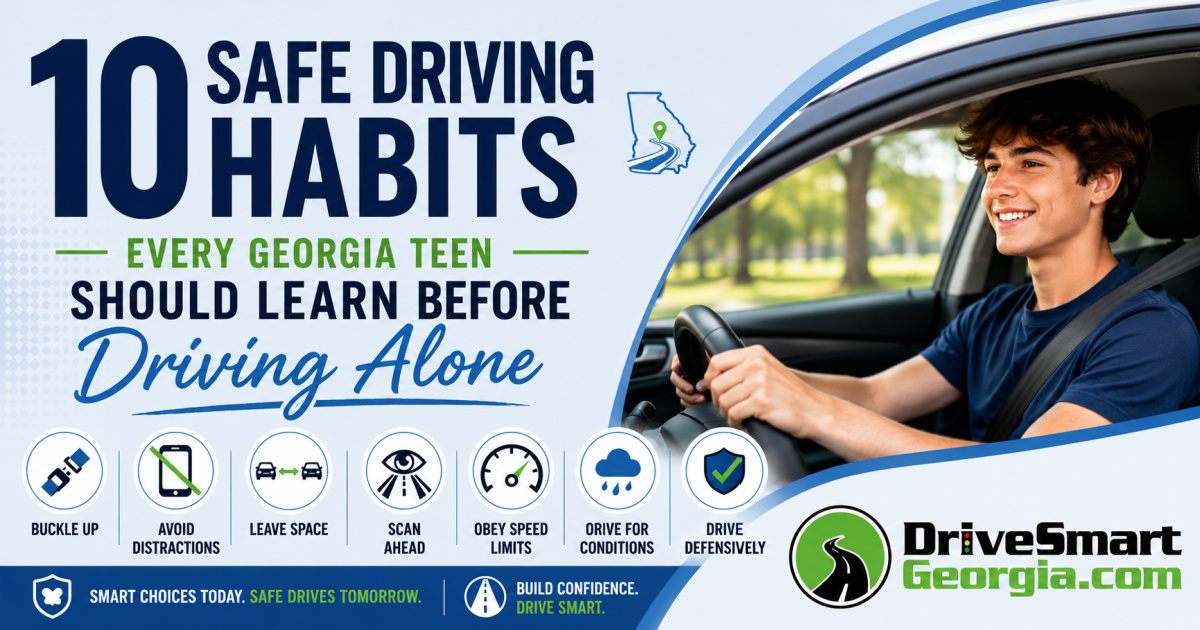
Learn 10 safe driving habits every Georgia teen should learn now before driving alone. Getting a driver’s license is one of the most exciting milestones in a teenager’s life. It also comes with tremendous responsibility.
While passing the Georgia road test proves that a new driver meets the minimum requirements to earn a license, becoming a truly safe driver takes practice, experience, and good habits.
The first year of driving is statistically the most dangerous. Inexperience, distractions, speeding, and poor decision-making contribute to thousands of crashes involving teen drivers each year. Fortunately, most of these risks can be reduced by developing smart driving habits early.
Whether you’re preparing for your Georgia Class D license or you’ve recently earned it, these safe driving habits for teens can help you stay safe every time you get behind the wheel.
10 Safe Driving Habits for Teens Before Driving Alone
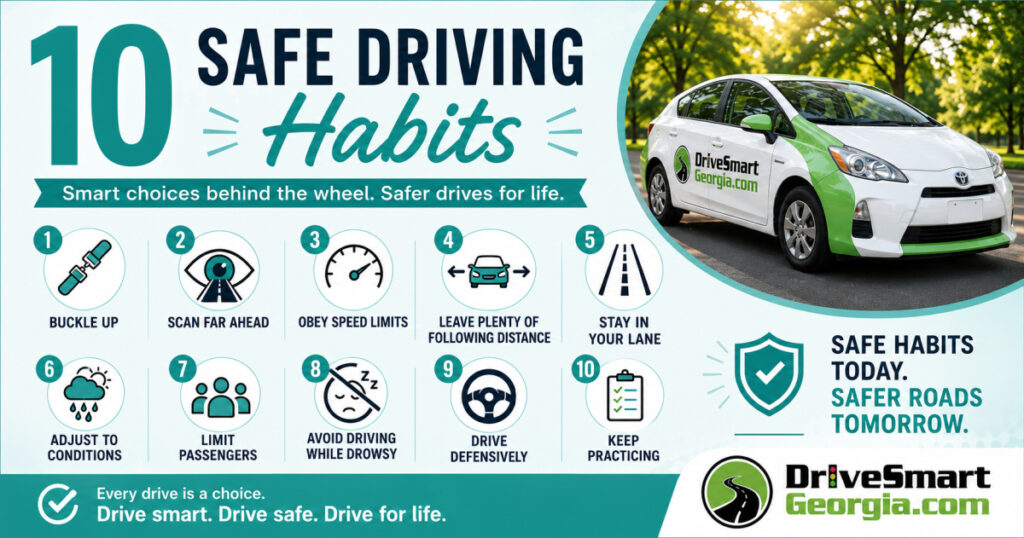
Teens can start off on the right foot by learning the below habits to stay safe on the road.
1. Eliminate Phone Distractions
Texting, checking social media, changing music, or even reading notifications can take your eyes off the road long enough for a serious crash to occur.
Before you begin driving:
- Put your phone on Do Not Disturb mode.
- Store it out of reach.
- Set your GPS before leaving.
- Let passengers handle navigation if needed.
Even hands-free conversations can divide your attention. Your first priority should always be driving.
Safe habit: If you need your phone, pull over somewhere safe before using it.
2. Always Wear Your Seat Belt
Buckling your seat belt should become automatic – before you even start the engine. Seat belts dramatically reduce the risk of serious injury during a crash, and they also help keep you in the correct position to control your vehicle during sudden maneuvers.
Don’t forget to make sure every passenger is buckled as well.
Safe habit: Never put the car in gear until everyone is wearing a seat belt.
3. Leave Plenty of Following Distance
One of the most common mistakes new drivers make is following other vehicles too closely.
A good rule is the three-second following distance under normal conditions.
Increase your following distance when:
- It’s raining
- Visibility is poor
- Driving at highway speeds
- Following motorcycles
- Driving behind large trucks
Safe habit: Allow extra space between your vehicle and the one ahead of you to give you more time to react if traffic suddenly slows.
4. Scan Far Ahead – Not Just the Car in Front of You
Experienced drivers constantly scan the road ahead instead of focusing only on the vehicle directly in front of them.
Look:
- 10-15 seconds ahead
- At intersections
- Side streets
- Crosswalks
- Brake lights several vehicles ahead
- Pedestrians and bicyclists
The earlier you identify potential hazards, the more time you have to react safely.
Safe habit: Keep your eyes moving instead of staring at one spot.
5. Obey Speed Limits
Speeding is one of the leading causes of crashes involving teen drivers.
Driving even a few miles per hour over the speed limit:
- Increases stopping distance
- Reduces reaction time
- Makes crashes much more severe
Remember that speed limits represent ideal conditions.
Slow down even more when:
- Roads are wet
- Traffic is heavy
- Visibility is limited
Safe habit: Remember that arriving a few minutes later is always better than not arriving at all.
6. Limit Passengers
Friends can make driving more fun – but they can also create distractions. Talking, laughing, playing music, and joking around all compete for your attention.
Georgia’s Class D license also limits young passengers during the first year of driving.
Treat every trip like a driving lesson until you’re much more experienced.
Safe habit: Focus on becoming a confident driver before regularly driving groups of friends.
7. Practice Defensive Driving
Defensive driving means expecting the unexpected.
Instead of assuming other drivers will do the right thing:
- Watch for drivers who may run red lights.
- Expect sudden lane changes.
- Be prepared for someone pulling out unexpectedly.
- Watch for distracted drivers.
- Keep escape routes available whenever possible.
Safe habit: Learn to expect the unexpected. The safest drivers aren’t just skilled – they’re prepared.
8. Avoid Driving When You’re Tired
Fatigue affects driving much like alcohol.
Sleepy drivers experience:
- Slower reaction times
- Poor judgment
- Reduced concentration
- Delayed decision-making
If you’re exhausted after school, sports, work, or studying, ask someone else to drive or wait until you’re more alert.
Safe habit: Never underestimate how dangerous drowsy driving can be.
9. Adjust for Weather Conditions
Georgia weather can change quickly.
Heavy rain, fog, or wet roads require different driving techniques.
When conditions worsen:
- Reduce your speed.
- Increase following distance.
- Turn on your headlights.
- Brake gently.
- Avoid sudden steering movements.
Safe habit: Adjust to conditions instead of driving the same way every day.
10. Keep Practicing Even After You Get Your License
Earning your license isn’t the end of learning – it’s the beginning.
The safest drivers continue improving their skills by practicing:
- Highway driving
- Night driving
- Parking
- Busy intersections
- Lane changes
- Merging
- Different weather conditions
Safe habit: Keep practicing to build confidence and better decision-making.
Why Professional Driving Lessons Build Better Habits
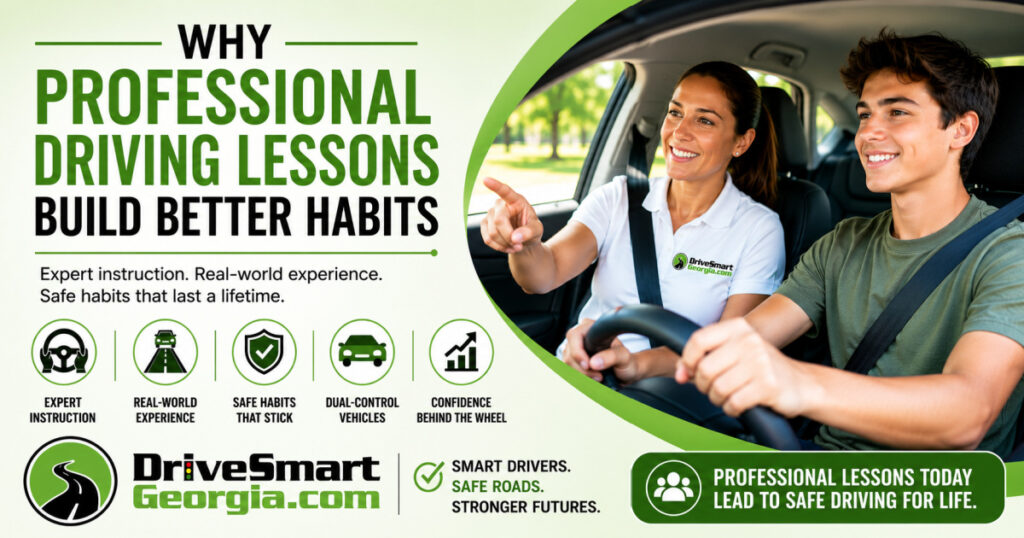
Many parents are excellent role models, but teaching a new driver can sometimes be stressful.
Professional driving instructors provide:
- Structured lessons
- Defensive driving techniques
- Hazard recognition
- Parking practice
- Highway driving experience
- Lane-changing techniques
- Personalized feedback
- Experience in a dual-control vehicle for added safety
Students often gain confidence much faster because they’re practicing with instructors who teach safe driving every day.
At Drive Smart Georgia, students receive one-on-one instruction from experienced driving instructors using vehicles equipped with dual controls for additional safety. Lessons are designed to help teens develop safe habits that last a lifetime.
Tips for Parents
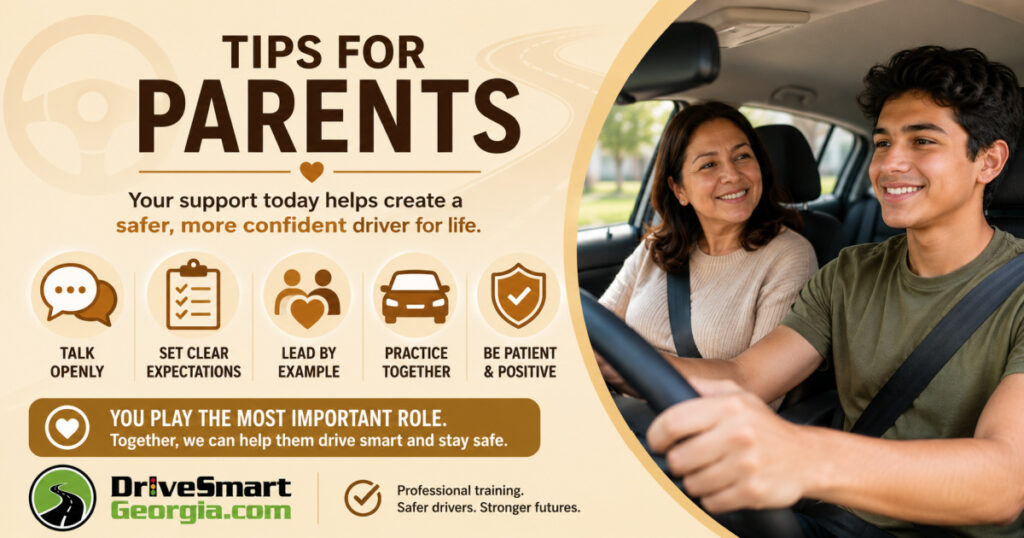
Parents have tremendous influence over their teen’s driving habits.
Help reinforce safe driving by:
- Continuing supervised practice after licensing.
- Modeling safe driving yourself.
- Limiting distractions in the vehicle.
- Encouraging questions after every drive.
- Practicing in different environments.
- Celebrating safe decisions – not just passing the road test.
Remember that confidence develops over time through consistent practice.
Frequently Asked Questions
How long does it take to become a confident driver?
Every driver learns at a different pace, but confidence typically develops after many months of consistent practice in different driving situations.
What are the biggest mistakes new teen drivers make?
Distracted driving, speeding, following too closely, and failing to recognize hazards are among the most common mistakes.
Do professional driving lessons really help?
Yes. Professional instruction helps teens develop safer habits, improve defensive driving skills, and gain confidence under the guidance of trained instructors.
What should teens practice after getting their license?
Focus on highway driving, parking, night driving, heavy traffic, rainy weather, and other situations that build real-world experience.
Final Thoughts
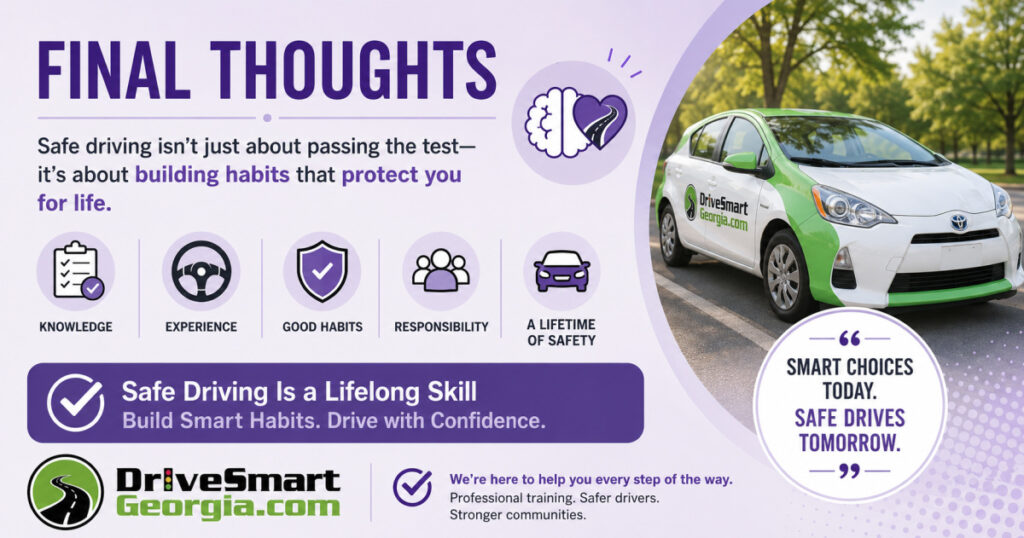
Safe driving isn’t about luck – it’s about habits.
Every decision behind the wheel matters, from putting away your phone to leaving extra following distance and anticipating hazards before they become emergencies.
By developing these safe driving habits for teens early, Georgia teens can reduce their crash risk, build confidence, and become safer, more responsible drivers for years to come.
If you’re preparing for your Georgia driver’s license, remember that learning doesn’t stop when you pass your road test. The safest drivers are lifelong learners who continue practicing, improving, and making smart choices every time they drive.
Drive Smart Georgia locations:
- Milton: 850 Mayfield Rd., Suite L-9, Milton, GA 30009. (770) 628-7540
- Johns Creek: 11380 Southbridge Pkwy., Alpharetta, GA 30022. (770) 232-0903
- Alpharetta: 5354 McGinnis Ferry Rd., Suite 226B, Alpharetta, GA 30005. (770) 232-0900
- Cumming: 1790 Peachtree Pkwy., Suite 202, Cumming, Ga. (770) 239-4294
- Suwanee: 970 Peachtree Industrial Blvd., Suwanee, GA 30024. (770) 741-0455
- Roswell: 590 W. Crossville Rd., Suite 204, Roswell, GA 30075. (770) 741-0405
Related articles:
- How to Overcome Driving Anxiety
- What is a Georgia Driver’s Ed scholarship?
- Driver’s Ed Timeline: Class First, Permit Later
- Defensive driving is now available at Drive Smart Georgia